Civilization’s Weakest Link

Disclaimer: This blog is a mix of observation, research, and sarcasm. It’s not investment advice, survival prep instructions, or a doomsday sermon.
Collapse doesn’t usually arrive with mushroom clouds or marching armies.
It shows up when Walmart looks like a post-apocalyptic Costco on a Saturday, shelves half-empty, shoppers twitchy, and trust evaporating faster than hand sanitizer in 2020.
Hidden Dependencies Nobody Thinks About
Medicine: 80% of U.S. antibiotics are made abroad, mostly in India and China. Break that chain and hospitals go from “inconvenienced” to “wrecked.”
Everyday Painkillers: 95% of ibuprofen and 70% of acetaminophen come from China. Tylenol could become contraband overnight.
Rare Earths: China processes 60-70% of global supply. No imports = no phones, EVs, wind turbines, or missiles.
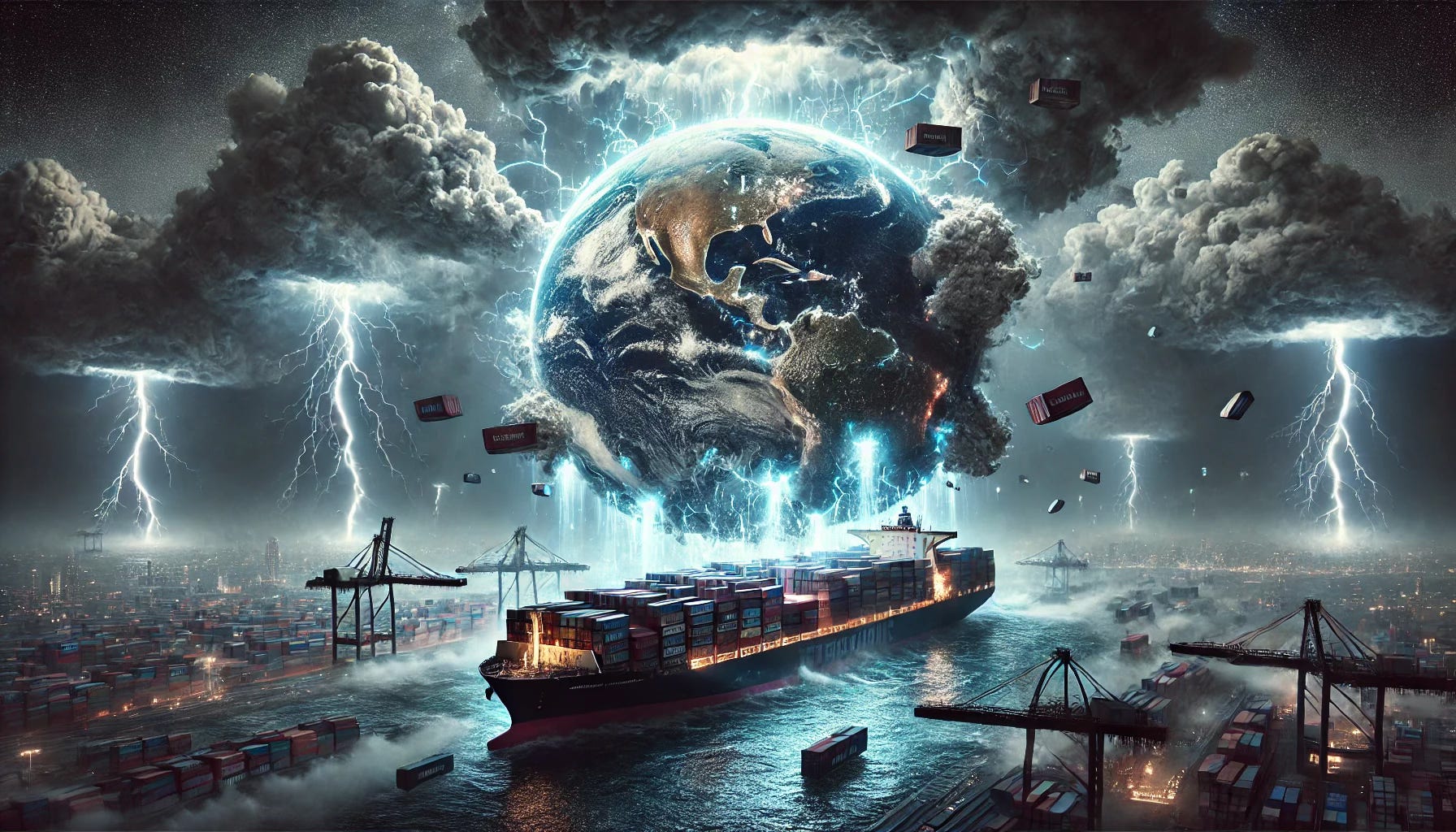
Trade Routes: 80-90% of global trade moves by sea. Choke a canal, and the world coughs.
Comfort Staples: Coffee (Brazil, Vietnam), chocolate (West Africa), bananas (Latin America). Forget semiconductors, imagine Monday morning without caffeine.
COVID gave us a preview: toilet paper rationing, chip shortages, empty shelves. Everyone swore we’d “learn lessons.” We didn’t.
What Collapse Actually Looks Like
Over-Optimization: “Just-in-time” = “just-out-of-everything.”
Global Chokepoints: One canal, one strait, one factory down = dominoes fall.
No Slack: The idea that someone else will pick up the slack? Myth.
Psychology of Scarcity: Empty shelves spread faster than shortages. One person hoards, ten panic, the aisle clears. Trust collapses before supply does.
Cyber Fragility: Hack one port, one pipeline, one cloud server, and watch the world lock up like a frozen iPhone. Collapse by keystroke, not cannonball.
Financial Dominoes: Sometimes the goods exist, but nobody can pay for them. A credit crunch, a sanctions freeze, or a currency spat, and suddenly ships sit in port like forgotten Amazon carts.
History agrees: Rome cracked when Egyptian grain shipments faltered. The Mayans fractured when obsidian and food networks broke. Our “modern” versions are just as brittle.
How Fast Does “Normal” Disappear?
Food: Ukraine + Russia supply 80% of sunflower oil. One war = bread prices everywhere spike.
Medicine: If India bans exports, antibiotics vanish in months.
Tech: The U.S. makes 2% of rare earths, consumes ~12%. Do the math.
Energy: Lithium/cobalt shortages crash the EV revolution.
Pet Food: Disrupted soy or corn shipments and suddenly Fluffy’s kibble is worth more than Bitcoin.
Environmental Wild Cards: A drought can shrink the Panama Canal. A volcano in Iceland can ground planes. Meanwhile, melting Arctic ice opens new trade routes that nobody is ready to fight over, except everyone.
Collapse doesn’t need zombies. It just needs Walmart at 30% capacity.
Coping Mechanisms (That Sound Satire But Real)
3D-printing car parts in your garage.
TikTok “resilient farming” tutorials growing lettuce in shoeboxes.
Black-market smugglers… for diapers.
Homemade willow bark tea subbing for aspirin while Congress debates gas stoves.
Absurd? Yes. Impossible? No.
Fragility By Design
We traded resilience for margins:
Governments outsourced.
Corporations optimized.
Citizens demanded cheap, fast, convenient.
Fragility wasn’t an accident. It was a business model.
And every press release still insists “supply is stable”, right up until the port strike, drought, or factory fire proves otherwise.
Meanwhile, we can livestream billionaires shooting themselves into space, but don’t ask the same system to guarantee baby formula on a shelf. Priorities.
The Gallows Humor Section
“Remember when you could buy eggs without a small loan?” Coming soon.
Apocalypse isn’t Mad Max. It’s Amazon stuck on “Currently Unavailable.”
Civilizations don’t collapse when the last bomb drops. They collapse when the last shipment doesn’t arrive.
The real horror movie? Costco on sample-day vibes, except every aisle is empty.
Thank You Note
To everyone reading, sharing, subscribing, and supporting, thank youuuu. I don’t write this to spark paranoia, but awareness. The future doesn’t break with a bang. It slips quietly, through weak links no one notices until they’re gone.
Civilization is less fortress and more Jenga tower. Pull the wrong block, antibiotics, chips, fertilizer, semiconductors, and it doesn’t explode. It just… collapses in slow motion.
Fragility was a choice. Resilience could be, too. The only question is: will we actually pay the price for durability, or keep voting for fragility with our wallets until the shelves say otherwise?
Stay sharp & stay connected. 🖤
I wasn’t worried until you mentioned coffee and chocolate. We need to act NOW!
Another great articulation of the obvious if you are paying attention and not just filling your Amazon cart every time an acquisition impulse strikes you. Thanks. I wrote about my trip down the rabbit hole as while back. So many ways for disaster to strike...