Predictive Programming
When Fiction Becomes Flashbacks

It’s the same story.
Every time.
Something shocking happens, a crisis, a mandate, a tech leap no one asked for.
And you pause.
Wait… wasn’t this in a movie?
Yeah. It was.
That was the point.
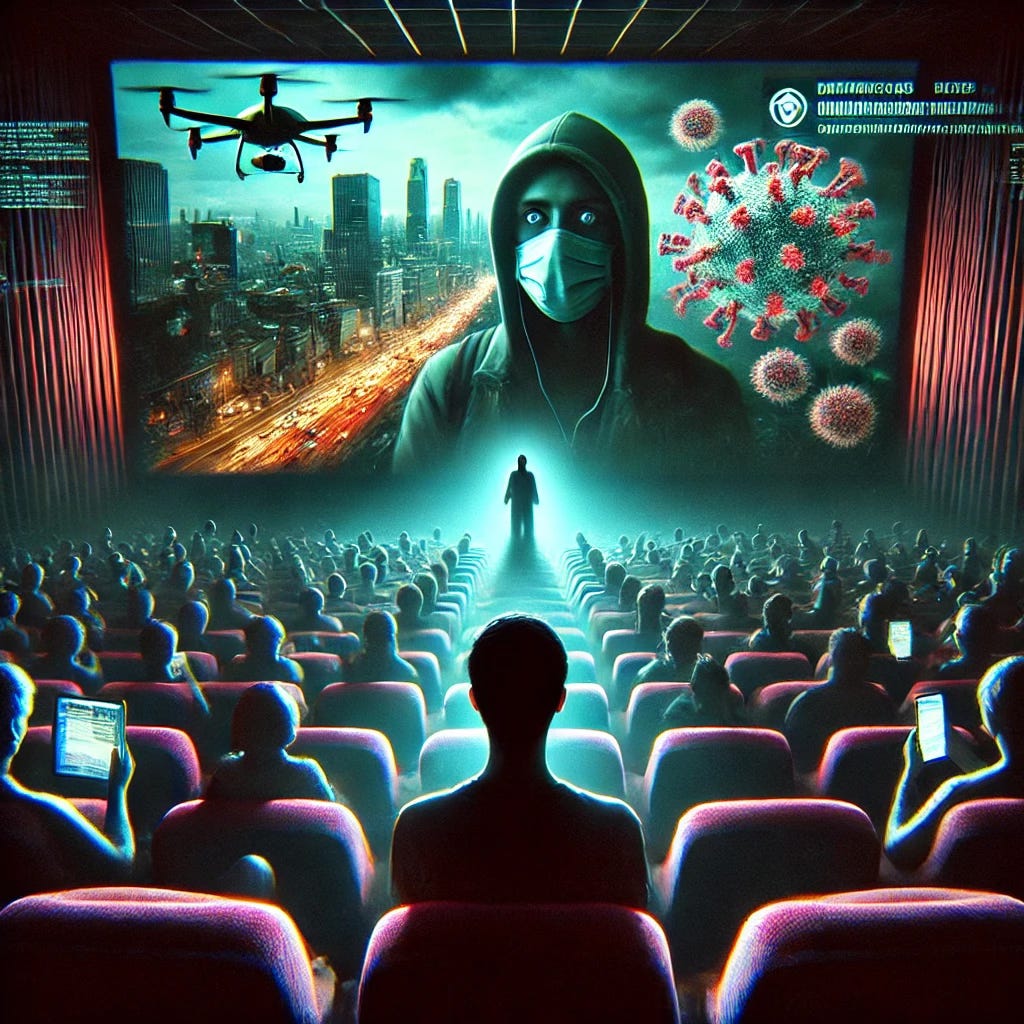
Predictive Programming
Where fiction isn’t just fiction.
It’s a slow-drip sedative, dulling your reflexes before the real thing hits.
This isn’t foreshadowing.
It’s narrative rehearsal.
Before every leap in control, there’s always a breadcrumb trail:
A virus outbreak thriller
A dystopian series about “resource management”
A lighthearted cartoon about social credit scores
A disaster flick featuring suspiciously familiar skylines
You don’t flinch when it happens in real life—
because your brain already filed it under “old news.”
It doesn’t feel like a breach.
It feels like a rerun.
Entertainment Trains Your Expectations
You think it’s storytelling.
But it’s emotional rehearsal.
It gets you used to:
Loss
Restrictions
Watching the world collapse while rooting for the antihero in a leather jacket
You've been:
Softened by screen time
Conditioned by “cautionary” tales
Desensitized by fiction that rhymed a little too well with tomorrow
I used to think I was just noticing patterns.
Then I realized—
the patterns were written ahead of time.
Not accidental.
Not prophetic.
Scripted.
Designed to guide how you’ll feel when reality catches up.
You’re not watching entertainment.
You’re watching emotional infrastructure get laid—
quietly, stylishly, and with really good cinematography.
Examples They Hope You Don’t Think About
“Contagion” (2011): eerily accurate viral progression
“Black Mirror”: social credit systems, digital consciousness, predictive policing
Every AI takeover plot… while governments roll out real versions with no public input
Teen dramas about surveillance… right before policy expands school monitoring
Dystopian thrillers where digital ID is cool and edgy, not terrifying
All fictional. Until it’s not.
Why Predictive Programming Works
Because shock creates resistance.
But familiarity creates permission.
So they soften the shock.
They rehearse it for you, stylized, aesthetic, scored with violins and neon.
By the time it shows up unironically, you’re already emotionally onboard.
“This feels familiar.”
Exactly. That’s the plan.
Predictive programming isn’t a warning.
It’s a setup.
It doesn’t prepare you to fight.
It prepares you to surrender, with a popcorn bucket in your lap.
By the time the real version arrives, your brain’s already made peace with it.
That’s not prophecy. That’s planning.
Disclaimer
This post isn’t claiming every sci-fi film is a psyop.
It’s asking why so many storylines age like leaked policy memos.
This isn’t paranoia.
It’s pattern recognition.
And in a world where content is king—
Narrative is the battlefield.
The question is:
Are you watching the script, or living in it?
You definitely have a point. But (and you say this), there is a non-nefarious reason for this phenomenon too. We write and make art about things before they are manifest. It’s how we humans create: think, tell stories, make. Lasers, submarines, space-travel, smart-phones - all these things were stories before they were real. I do agree that the Deep State has a pipeline into Hollywood and lays the psychological groundwork for ops they have planned. I do. But I can also easily see how “Contagion” et al could have been conceived of independent of what Fauci and company had planned for us. It was in the zeitgeist.
If we were honest-we’re all feeling it.